Elizabeth Academy Montessori private school in Salt Lake City Utah.
Do not go where the path may lead, go instead where there is no path and leave a trail.

Elizabeth Academy Montessori private school in Salt Lake City Utah.
Do not go where the path may lead, go instead where there is no path and leave a trail.
Carol Barnier has some helpful ideas to stick in your toolkit for teaching hightly distractible kids. Games have been very helpful at our house. Maybe some of these little suggestions will be helpful to you in some way. Teaching Highly Distractible/ADD/ADHD Children.

Learning and Developmental Disabilities Program.
It is always nice to see the number of Montessori Schools serving children with developmental disabilities on the rise! Hurray!
Hope you enjoy some of these thoughtful and informative videos, fan the flames of interest, and keep that fire burning.
Schedule of Events | AzScitechFest. Cool science in Phoenix.


World’s Most Visited Science Museums, Science Centers, Science CentresMuseum Planning. I have been collecting these websites as a resource. I find they have rich online activities, videos, and games to supplement our science curriculum. Enjoy!
Florida Homeschool Help Inc. – Information for Parents of Children with Special Needs.. This is a comprehensive resource of links for children with special needs or learning disabilities who are being homeschooled. I have not checked all the links myself, but you might find some treasures here.
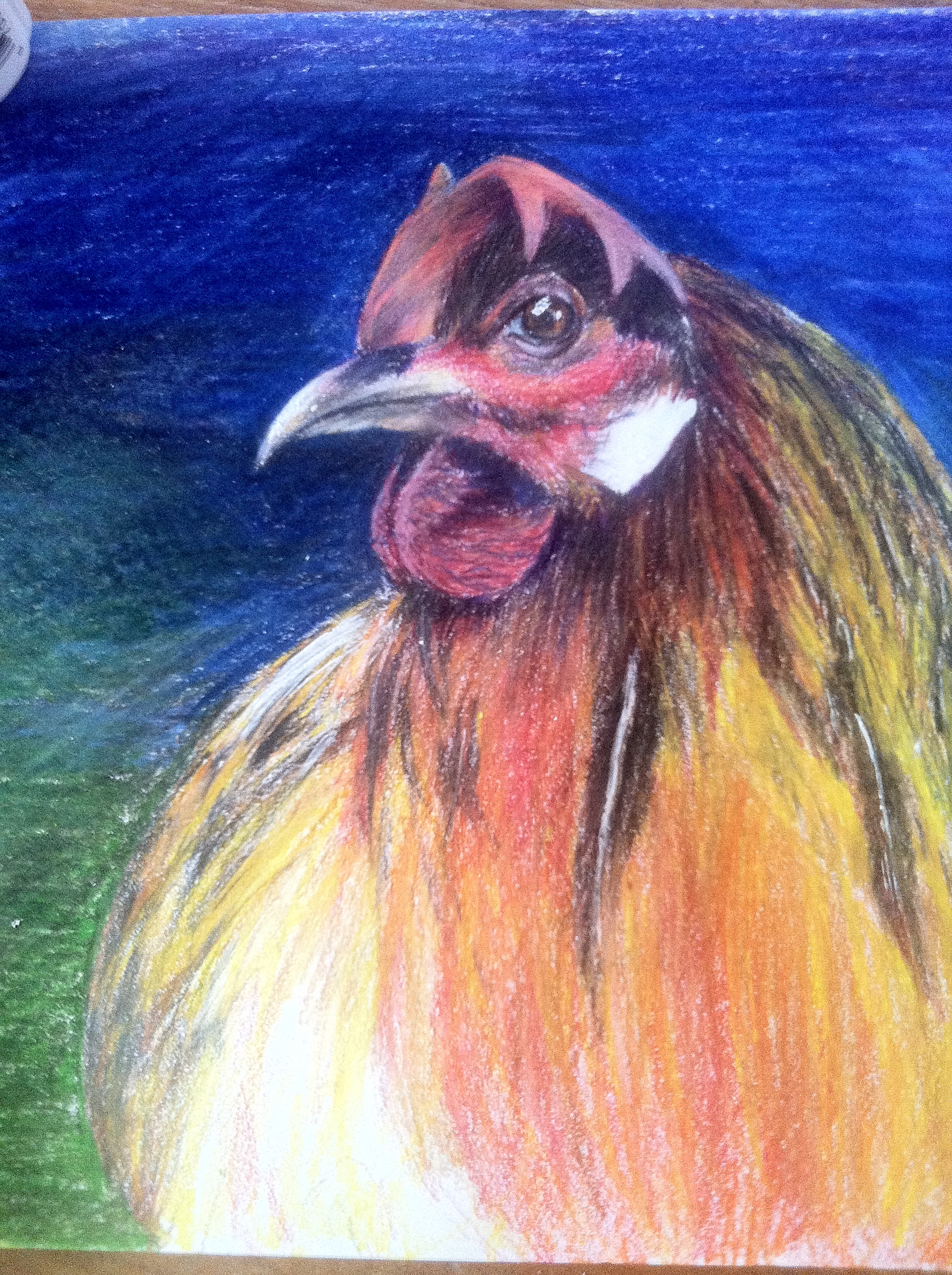
Sweet Sally….

Nurture the Spirit of the child and you won’t lose your way.
Updated October 2009
By Christopher J. Klicka
HSLDA Senior Counsel
We cannot forget to consider what the child with special needs experiences as well. Living with a handicap such as blindness, cerebral palsy, a speech impediment, autism, retardation, a disease, or one of many types of learning disabilities is difficult. It is a daily struggle emotionally, mentally, and many times physically. The child’s self-esteem is constantly put to the test. Some handicaps or learning disabilities can be overcome with consistent and focused effort. Other handicaps can only be managed and may never go away.
Living with multiple sclerosis these last few years has helped me appreciate the struggles of a physically handicapped person. Every day it is hard for me to simply walk, put my socks on, or stay in 80-degree weather for any length of time. The emotional drain is intense. The need to think and plan for logistics to achieve normal movement is a heavy burden. The quality of life from a human perspective is diminished. Hiking in the woods or camping is too hard, going to the beach is incapacitating, and participating in most sports that I love is out of the question.
Personal attention and love by my family is more important to me than ever before. I know a child with special needs truly needs this extra support and reassurance. Homeschooling your special needs child makes that intense, loving support possible.
We have seven children, including a set of twins who were supposed to have died in the womb. Yet God answered our desperate prayers in a miraculous way. Amy, whose head was caved in, spine twisted, and was not hooked up right, completely recovered in the womb and was born alive at 2 lbs. 13 ounces. Although Amy was miraculously delivered, she was mentally much slower than her twin sister, Charity. At 6 years old, Amy was not ready to read like her sister and required much more time, attention, and love. Sending her to an institutional school would have devastated her fragile self-confidence. Teachers could not possibly give her the one-on-one attention and love she needed.
In light of these experiences, I am convinced that homeschooling children with special needs is the most effective way to successfully teach them and is the ideal environment in which they will learn and thrive.
Objective studies demonstrate that parents are providing a superior form of education for their special needs children by teaching them at home. Contrary to the claims of the education elite, parents do not have to be specially certified or have special qualifications to teach their handicapped children at home.
In fact, in one of the most thorough studies performed thus far on the subject, Dr. Steven Duvall conducted a year-long study involving eight elementary and two junior high students with learning disabilities. He compared one group of five students that received instruction at home with a group of five students who attended public schools. He was careful to match the public school students to the homeschool students according to grade level, sex, IQ, and area of disability. Using a laptop computer, Dr. Duvall sat in on teaching sessions and took an observation every 20 seconds, creating tens of thousands of data points that were then fed into a statistical analysis package. Normally his research included a second observer who double-checked Dr. Duvall’s readings.
Dr. Duvall recorded and analyzed academically engaged time by students during instructional periods. He also administered standardized achievement tests to them to measure gains in reading, math and written language. His results show that the homeschooled, special needs students were academically engaged about two-and-one-half times as often as public school special needs students! He found the children in the public school special education classrooms spent 74.9 percent of their time with no academic responses, while the homeschool children only spent 40.7 percent of their time with no academic responses. He also found that homeschools have children and teachers sitting side-by-side or face-to-face 43 percent of the time, while public education classrooms had such an arrangement for special needs children only 6 percent of the time. This was a tremendous advantage for the homeschoolers.
His study further demonstrated that the homeschool students averaged six months’ gain in reading compared to only a one-half month gain by the special public school students. Furthermore, the homeschool special needs students during the year gained eight months in written language skills compared to the public school counterparts who gained only two-and-one-half months.
Dr. Duvall summarized, “These results clearly indicate that parents, even though they are not certified teachers, can create instructional environments at home that assist students with learning disabilities to improve their academic skills. This study clearly shows that home schooling is beneficial for special needs students.” 1
It is interesting to note that Thomas Edison was expelled from public school at age 7 because he was considered “addled” by his public school teacher. He lasted only three months in formal schooling. Over the next three years, his mother taught him the basics at home, and as Edison himself stated, “She instilled in me the love and purpose of learning.” 2 Without any special qualifications, Mrs. Edison helped her son overcome his disabilities to be come a great inventor.
Once again we see homeschooling works for any child!
Creating Inclusive Environments in Home and in School and in the Community the Montessori Way
Ideas and Writings about Inclusive Montessori Settings in School and Home
Make Something
Montessori Ramblings and Discussion
Serving Barrie and Richmond Hill, Ontario, Canada.
“Laws and treaties are not enough; what is required is a new world, full of miracles.” (Maria Montessori)
"As my mind begins to spread its wings, there's no stopping curiosity.." Jack Johnson
Teaching English as a Foreign Language
Homeschooling in the Desert with Intention and Hope and Special Needs
Homeschooling in the Desert with Intention and Hope and Special Needs
This is a journal, of sorts, of an organic garden in SW Michigan. "Ut sementem feceris, ita metes: non semper erit aestas."
A little more complicated than 2+2
Getting Through All Life Slings Her Way
SERC Home School Resources (photo below by Tyler Bell)
Follow the child.
Homeschooling in the Desert with Intention and Hope and Special Needs
Homeschooling in the Desert with Intention and Hope and Special Needs
Homeschooling in the Desert with Intention and Hope and Special Needs

 my project4peace